

Traditional server rooms are built from three separate layers: servers for compute, a storage array (SAN or NAS), and a storage network connecting the two. Each layer has its own hardware, management console, support contract and often its own specialist. When something breaks, you first have to work out which layer is at fault. Hyperconverged infrastructure (HCI) changes that.
What is hyperconverged infrastructure?
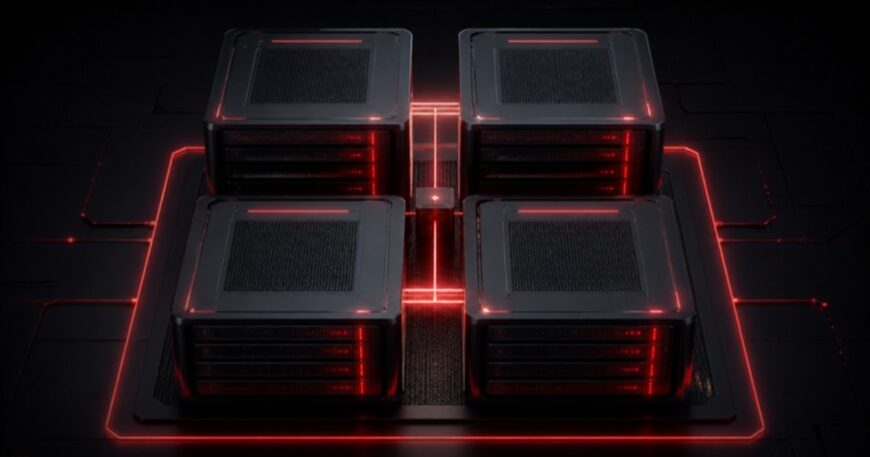
HCI combines compute and storage into a cluster of standard servers, called nodes, managed by one piece of software. Nutanix is one of the best-known HCI platforms.
What changes in practice
- One console to manage virtual machines, storage and the cluster.
- Grow in steps: need more capacity? Add a node, rather than replacing a storage array.
- Built-in resilience: data is copied across nodes, so a single node failure doesn’t take systems down.
- Less to manage: fewer boxes, less rack space and power, and fewer contracts to renew.
When HCI isn’t the answer
HCI isn’t right for everything. Very small sites with one or two servers, or very specialised storage needs, may be better served another way. But if your SAN and servers are both due for a refresh, it’s worth comparing.
Questions to ask before a refresh
- When do your current servers and storage go out of warranty and support?
- Which workloads must stay on-premises, and which could move to the cloud?
- How much growth do you expect over five years?
- Who manages the infrastructure today, and how much time does it take?
- What are your recovery targets (RPO and RTO) for key systems?
The answers decide whether HCI, traditional servers and storage, or cloud is the best fit, and often the answer is a mix.
How Pentacle IT Solutions can help
Pentacle IT Solutions is a Nutanix registered partner. We design, deploy and support Nutanix HCI and virtualisation for businesses in Lucknow and across Uttar Pradesh.

